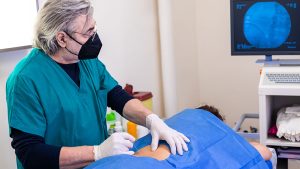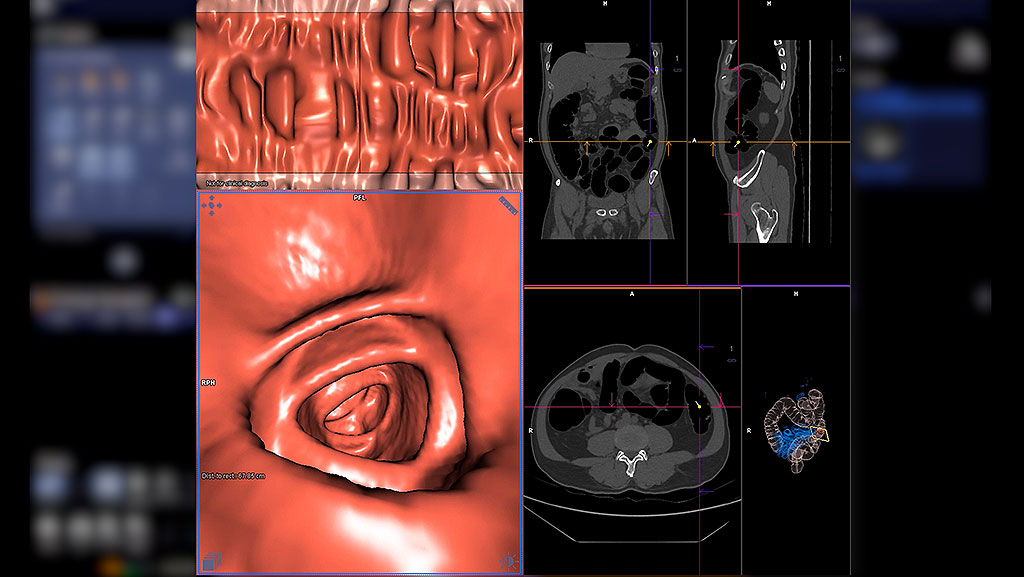
CT colonography, also called virtual colonoscopy, is a medical imaging test that checks the colon and rectum for polyps and colorectal cancer. It uses a CT scanner to take many pictures of the inside of your belly. A computer converts these images into clear 2D and 3D images that a radiologist examines for signs of disease.
This test is a noninvasive alternative to a traditional colonoscopy. A standard colonoscopy uses a camera on a long, flexible tube to examine the colon. A virtual colonoscopy does not require sedation and does not insert a tube all the way through the colon.
People often choose CT colonography when they want a colon cancer screening test that is less uncomfortable than a traditional colonoscopy. It can help find precancerous polyps, which are growths that could later turn into colorectal cancer, so they can be treated early.
What Is CT Colonography (Virtual Colonoscopy)?
CT colonography is a medical imaging test that uses a CT scanner to visualize the inside of the large intestine (colon and rectum). It is also called a virtual colonoscopy because the images let doctors see the colon as if they were inside it, without the need for a real tube.
In a traditional colonoscopy, a doctor uses a long tube with a camera to view the colon. In CT colonography, a CT scan captures multiple X-ray images from different angles. Then a computer combines these images to create 2D and 3D views of the colon. A radiologist reviews these images to find polyps or other problems.
This test helps screen for colorectal cancer and find small growths before they turn into cancer. It is often done as part of colon cancer screening test plans for people at average risk, age 45 or older.
CT colonography can also show problems outside the colon, such as issues with nearby organs. A doctor may use this information to plan more tests or treatments if needed.
The test usually takes about 10 to 20 minutes and does not need sedation, so most people can go home right after it is done.
Why It’s Used: Purpose & Benefits
CT colonography, also called virtual colonoscopy, is a screening test that doctors use to find signs of colorectal cancer, polyps, and other problems in the large intestine (colon and rectum). It uses a CT scanner to capture many detailed 2D and 3D images of the inside of your belly, without the need for a long tube inside your body.
Why Doctors Use It
Doctors mainly use CT colonography to screen for colon polyps, early colorectal cancer, and other growths before you have any symptoms. This helps find problems early when they are easier to treat.
This test can also help if a person does not want a traditional colonoscopy or cannot have sedation. It may be suggested if someone is at average risk for colon cancer or if a traditional colonoscopy is not possible.
Benefits of Virtual Colonoscopy Over Traditional Colonoscopy
1. Less invasive than optical colonoscopy
Virtual colonoscopy does not require a long, thin tube with a camera to reach deep into the colon, so it is less invasive.
2. No sedation needed
Since you do not need sedation, you do not need someone to drive you home after the test. This is a big benefit for many people.
3. Short test time
The test usually takes only about 10 to 20 minutes to complete, which is much shorter than a traditional colonoscopy.
4. Good for finding polyps and cancer early
Studies show that virtual colonoscopy can find medium and large polyps and early signs of cancer at about the same rate as traditional colonoscopy, especially for people at average risk.
5. May reveal issues outside the colon
A virtual colonoscopy can also detect other health issues near the colon, providing useful information that a traditional colonoscopy might miss.
When It Is a Good Choice
Doctors often recommend this test for people who:
- Are 45 years old or older and need colon cancer screening. (Major guidelines also support starting screening at this age)
- Want a noninvasive colon screening option.
- Cannot have sedation because of health or personal reasons.
- Have a risk of complications from a traditional colonoscopy.
How CT Colonography Works
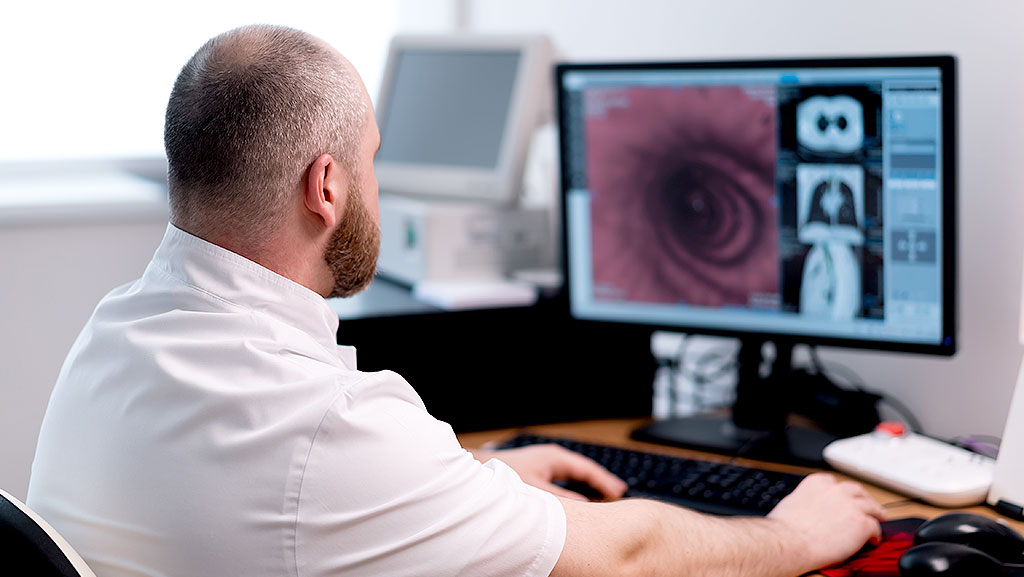
CT colonography (also called virtual colonoscopy) uses a special CT scan to capture many 2D and 3D images of your colon and rectum, so doctors can see inside your large bowel without inserting a long tube. These images help doctors find polyps or early signs of colorectal cancer.
What Technology Does It Uses
This test uses a CT scanner to take many X-ray pictures of your belly from different angles. A computer then builds these pictures into detailed views of your large intestine that a radiologist can review.
The CT scanner can show organs, soft tissue, and blood vessels inside your body with more detail than regular X-rays because it creates cross-sectional images.
Step-by-Step Procedure
Here is how your virtual colonoscopy exam usually works:
1. Before the scan
You will first perform a bowel preparation at home to ensure your colon is clean and empty. This is important so the CT images are clear and the doctor can see problems like polyps or cancer. Doctors often give you a clear liquid diet for a day and special cleansing steps.
2. On the day of the exam
A technologist will have you lie on an exam table, usually on your back or stomach. A thin tube is placed gently into your rectum to expand the colon with air or carbon dioxide. This makes the walls of your colon easier to see in the images.
3. During the CT scan
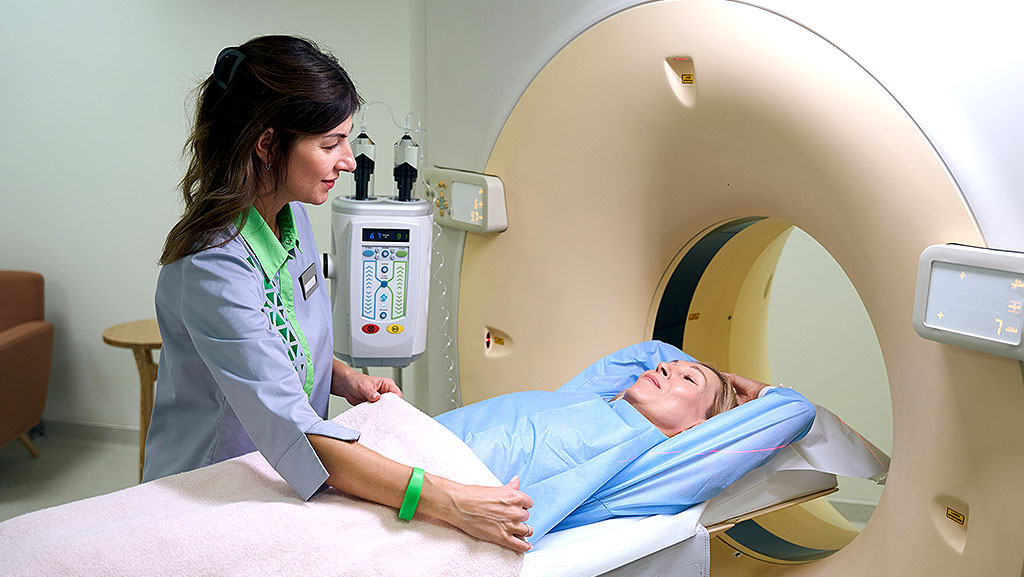
Your body slowly moves through the tunnel-shaped CT scanner as the machine takes dozens of images. You may be asked to hold your breath for short periods to prevent the images from becoming blurry. The scanner may take images with you lying on your back, then on your side, or on your stomach to get a complete view.
4. After the scan
Once the images are taken, the tube is removed, and you can usually go home right away because sedation is not needed. A radiologist examines the images to look for any signs of polyps or cancer and sends a report to your doctor. If a polyp or other problem is found, you may be referred for a traditional colonoscopy to remove it.
Why This Method Works
A virtual colonoscopy gives doctors a virtual 3D view of the large intestine that may show problems like polyps or tumors that could turn into cancer. It also may reveal issues outside the colon that need attention.
This method of colonoscopy is usually quicker and more comfortable than a traditional colonoscopy because it does not require long tubes or sedation.
Preparation: What to Do Before the Test
Before your CT colonography (virtual colonoscopy), you must prepare your colon so the CT scanner can take clear 2D and 3D images of the large intestine. This process, called bowel preparation, helps the radiologist see polyps or signs of colorectal cancer clearly.
Talk to Your Doctor First
Tell your doctor about any health problems you have, such as kidney disease, heart issues, or if you might be pregnant. They will decide which type of prep and medicines are safe for you. If you take medications, your doctor may tell you how to adjust them before the test.
Follow a Special Diet
To prepare your colon:
- Clear liquid diet: Most people drink clear liquids like water, tea or coffee (no milk), broth or bouillon, sports drinks, apple juice or white grape juice without pulp the day before your exam. Avoid red, purple, or orange drinks because the color can look like stool in images.
- Some places also recommend starting a low-fiber diet a few days before the exam to make the prep easier.
Take Bowel Cleansing Medicine
Your doctor will give you a bowel prep kit, which may include:
- Laxatives or PEG solutions to help empty your colon.
- Sometimes contrast medicines are used to help the CT images show the colon clearly.
You usually start this the day before the test. Follow the exact instructions your healthcare provider gives you.
Drink Plenty of Fluids
While you are on a clear liquid diet and taking laxatives, drink plenty of clear liquids to stay hydrated. This helps flush the colon clean and prevents dehydration.
Final Steps Before the Exam
- Do not eat or drink any food or liquids after midnight before your appointment unless your doctor tells you otherwise.
- Arrive at the facility early so staff can review your prep and discuss the exam with you.
- You may be allowed to drink water up to a few hours before the test for comfort. Follow your clinic’s exact instructions.
Why This Matters
Good bowel preparation is critical. If your colon is not fully clean and empty, the CT images may not show small polyps or abnormalities, and the test may need to be rescheduled.
What to Expect During and After the Exam
When you go for a CT colonography (virtual colonoscopy), the test happens in a hospital or clinic’s radiology department using a CT scanner to take many 2D and 3D images of your large intestine (colon and rectum) so doctors can look for polyps or signs of colorectal cancer. The whole process is usually short and does not need sedation.
During the Test
Here is what usually happens on exam day:
1. Getting ready
You will change into a gown and lie on the CT scanner table. A technologist places a thin tube into your rectum to gently fill your colon with gas or air. This makes it easier for the radiologist to see the inside walls of your colon.
2. Scanning
The CT scanner takes many images from different angles. You lie still while the table moves through the scanner. You may need to hold your breath for a moment or two to keep the pictures clear. The scan may start while you lie on your back, then on your side or stomach, so the pictures cover the whole colon.
3. Feelings during the scan
Most people feel only a sense of fullness from the gas, as if they need to pass gas. This may be a bit uncomfortable, but not painful. Your technologist can talk to you through a speaker system if you need help.
The exam usually takes about 10 to 15 minutes. You do not need sedation, so you can go home when it’s done.
After the Test
After your virtual colonoscopy is finished:
- You can usually go home right away without needing someone to drive you.
- You can return to your normal diet and activities unless your doctor tells you otherwise.
- You may feel gas, bloating, or mild cramping as the air leaves your colon, but this usually goes away quickly.
- Drink plenty of fluids for the next 1 to 3 days to stay hydrated and support your body’s recovery.
- If your test used a contrast, you can usually eat and drink right away, but your provider might advise starting with a light meal.
If the radiologist finds anything like polyps or signs that need more tests, your doctor will talk with you about a follow-up colonoscopy.
Overall, virtual colonoscopy is designed to be a comfortable, quick way to check your colon without sedation or a long recovery time.
Risks and Limitations
CT colonography (virtual colonoscopy) is a useful tool to screen for colorectal cancer and find polyps, but it also has some important risks and limitations you should know before you decide. These help you understand what the test can and cannot do.
Risks of CT Colonography
1. Small risk of injury to the colon
During the test, the colon is gently inflated with gas or air. This can very rarely cause a tear or perforation of the colon wall. This risk is much lower than that with a traditional colonoscopy, but it is still possible.
2. Radiation exposure
CT colonography uses a CT scanner, which exposes you to a small amount of radiation. Although this amount is usually low, radiation can harm cells and may slightly increase the long-term risk of cancer in rare cases. Your doctor will use the lowest effective radiation dose possible.
3. Extra testing from findings outside the colon
Because CT imaging shows not just the colon but also nearby organs, it can reveal unrelated findings in places like the kidneys or liver. These findings may lead to more tests that you may not expect.
Limitations of CT Colonography
1. No treatment during the test
Unlike a traditional colonoscopy, CT colonography cannot remove polyps during the same visit. If the test finds something concerning, you will need a follow-up colonoscopy to remove the polyp or take a biopsy.
2. May miss small polyps
Virtual colonoscopy is good at detecting larger polyps, but it is less accurate at detecting very small growths. Some tiny or flat polyps may not appear clearly on the images, and this could delay detection.
3. False positives and follow-up procedures
Sometimes the CT images may show something that looks abnormal but turns out to be harmless. This can lead to false-positive results, meaning you may have to undergo extra tests or a traditional colonoscopy that turns out to be unnecessary.
4. Bowel prep still needed
You must still use the same bowel preparation as for a regular colonoscopy to ensure your colon is clean. This prep, including a clear liquid diet and laxatives, can be uncomfortable for many people.
Who Might Need a Traditional Colonoscopy Instead
For people at high risk of colorectal cancer, such as those with inflammatory bowel disease or a strong family history of cancer, a traditional optical colonoscopy is usually preferred because it is better at detecting small or flat polyps and allows immediate removal of abnormal tissue.
Who Is a Good Candidate?
A CT colonography (virtual colonoscopy) is an option for many people who need colon cancer screening or want a less invasive way to check for polyps or early colorectal cancer. Your doctor will help you decide if this test is right for you.
Good Candidates for Virtual Colonoscopy
Here are the people who are often good candidates for CT colonography:
1. Adults aged 45 to 75 with average risk
Most adults should begin colorectal cancer screening around age 45, and CT colonography is one of the recommended screening options for people at average risk (people with no strong family history or symptoms).
2. People who cannot have sedation or a traditional colonoscopy
If you have health issues that make sedation risky or you prefer to avoid sedation, a virtual colonoscopy can be a good choice because it does not require sedation.
3. People who prefer a less invasive test
Some people choose CT colonography because it is noninvasive and usually takes less time than a traditional optical colonoscopy.
4. People with a medical reason that makes a traditional colonoscopy difficult
If a regular colonoscopy cannot be performed due to twists, strictures, or narrow segments of the colon, CT colonography can still provide a view of the large intestine.
Who Is Not a Good Candidate
Some people should not use CT colonography as their first choice for screening:
- People with inflammatory bowel disease, such as Crohn’s disease or ulcerative colitis.
- People with a strong family history of colorectal cancer or many polyps.
- People who already have symptoms like rectal bleeding or persistent pain may need a traditional colonoscopy for diagnosis and possible biopsy or treatment.
Talking With Your Doctor
Before getting a CT colonography, talk with your doctor about your:
- Age and risk for colorectal cancer
- Family history of cancer or polyps
- Current symptoms or previous tests
- Health conditions that might affect your test choice
Your doctor can help you decide whether virtual colonoscopy is right for you and which screening test to use.
CT Colonography vs. Other Screening Tests
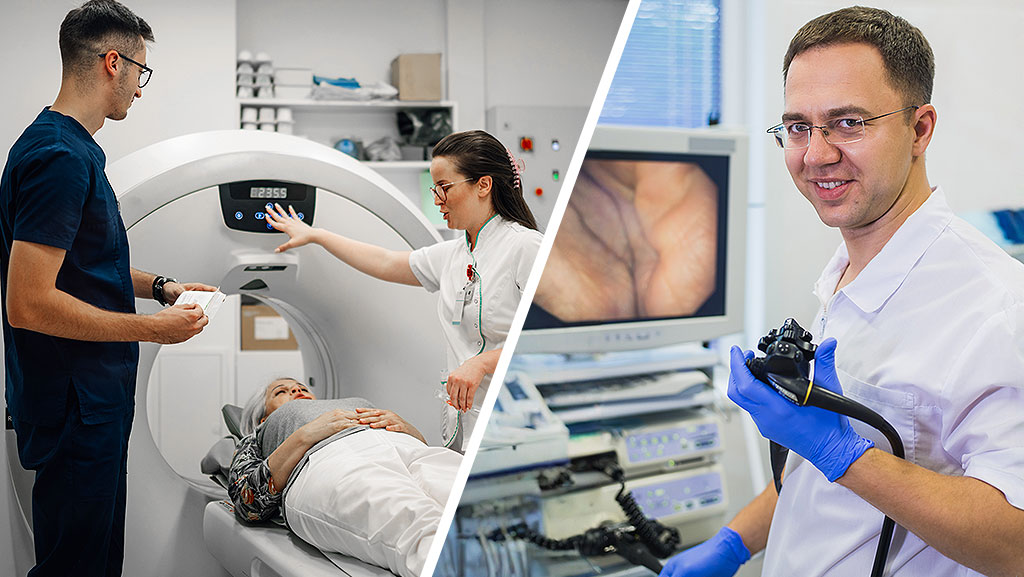
When people choose CT colonography (virtual colonoscopy), they often want to know how it compares with other colon cancer screening tests, such as optical colonoscopy, flexible sigmoidoscopy, and stool tests (such as the fecal immunochemical test, or FIT). Each test has strengths and limitations, so understanding them helps you choose the one that suits you best.
CT Colonography vs. Optical Colonoscopy
CT colonography and optical colonoscopy both look for polyps and colorectal cancer in the colon and rectum, but they work differently. Virtual colonoscopy uses a CT scanner to create 2D and 3D images of your large intestine without inserting a long tube into your body.
- Invasiveness: CT colonography is noninvasive and usually more comfortable, while optical colonoscopy is invasive and uses a flexible tube.
- Sedation: With CT colonography, sedation is not needed, so most people go home right after the procedure. Optical colonoscopy generally requires sedation.
- Removal of Polyps: During a colonoscopy, the doctor can remove polyps or take a biopsy immediately if polyps are found. Virtual colonography cannot remove polyps, so you may need a follow-up colonoscopy if anything abnormal is found.
- Accuracy: Colonoscopy is often considered the gold standard because it allows doctors to both detect and treat problems in a single visit. Virtual colonography may be slightly less sensitive for tiny or flat polyps, though it detects larger polyps well.
- Radiation: CT colonography exposes you to a small amount of radiation, which is a factor to consider.
CT Colonography vs. Stool-Based Tests
There are non-imaging options, such as the fecal immunochemical test (FIT) and stool DNA tests, that you can do at home. These tests check your stool for hidden blood or DNA markers that might suggest problems.
- Convenience: Stool tests are easy to do at home and don’t require a hospital visit or bowel prep.
- Detection: These stool tests are good at spotting signs of cancer early but may miss some polyps. If they come back positive, a colonoscopy or another visual exam is usually needed.
- Schedule: Stool tests often need to be done more frequently (every year or every few years) than CT colonography (every 5 years) or colonoscopy (every 10 years) if no problems are found.
CT Colonography vs. Flexible Sigmoidoscopy
Flexible sigmoidoscopy looks only at the lower part of the colon, not the whole large intestine. Virtual colonography views the entire colon, which may catch issues that sigmoidoscopy could miss.
Key Differences at a Glance
- Optical colonoscopy: Most thorough; can remove polyps during the procedure.
- CT colonography (virtual): Less invasive; no sedation; may still need follow-up if abnormalities are found.
- Stool tests (FIT): Very easy and noninvasive; must be done often.
- Flexible sigmoidoscopy: Examines only part of the colon.
Choosing the right test depends on your health history, risk for colorectal cancer, comfort with the procedure, and what your doctor suggests. All these options aim to detect early signs of cancer or polyps so treatment can happen sooner rather than later.
FAQs (Frequently Asked Questions)
Here are clear answers to common questions people ask about CT colonography (virtual colonoscopy). These help you understand what to expect and how this test works.
What Is a Virtual Colonoscopy?
CT colonography is a type of screening test that uses a CT scanner to take 2D and 3D images of your colon and rectum to look for polyps or colorectal cancer without inserting a long scope into your body.
How Long Does the Test Take?
The actual CT scan part of a virtual colonoscopy usually takes about 15 minutes.
Does It Hurt?
Most people feel only a sense of fullness or pressure when the colon is gently inflated with gas. Significant pain is uncommon.
Do I Need Sedation?
No. Virtual colonoscopy does not require sedation or anesthesia, so you can go home right after the exam.
Will I Need to Do Something After the Test?
After the test, you can usually return to your normal diet and activities because you did not receive sedation. A radiologist will look at the images and send a report to your doctor.
Can Virtual Colonoscopy Find Other Problems?
Yes. Because the CT scanner images more than just the colon, this test can sometimes show issues in other parts of the abdomen, such as the kidneys or liver. If something is found, your doctor may recommend more tests.
Do I Still Need a Colonoscopy If Something Is Found?
Yes. If the virtual colonoscopy detects a polyp or something that appears abnormal, you will usually need a traditional colonoscopy to remove the polyp or obtain a biopsy.
How Often Should I Have a Virtual Colonoscopy?
Doctors often recommend this test as a colon cancer screening every five years for people at average risk starting at age 45. Talk with your doctor about how often you should be screened.
Is It Covered by Insurance?
Coverage can vary. Some private insurance plans cover CT colonography, but Medicare may not cover it for routine screening. Check with your insurance provider before you schedule the test.
Is This Test Good for Everyone?
CT colonography works well for people at average risk of colorectal cancer and those who want a less invasive test. It may not be the best choice for people with symptoms like rectal bleeding or those at high risk for colon cancer — in those cases, a traditional colonoscopy may be better.
Conclusion
CT colonography, also called virtual colonoscopy, is a noninvasive colon screening test that helps doctors detect polyps and early colorectal cancer using a CT scanner to create detailed 2D and 3D images of your colon and rectum without the long insertion of a traditional scope. It is a useful tool to find problems before they cause symptoms, especially for people at average risk who want a less invasive option.
This test has clear advantages: it is generally faster, less invasive, and does not require sedation like a traditional colonoscopy, and you can often return to your normal activities right after the exam. The images can also sometimes reveal issues outside the colon, giving doctors more information.
However, virtual colonography also has limitations. It uses low levels of radiation, and if polyps or signs of disease are found, you may still need a follow-up colonoscopy to remove them or take a biopsy. Like all screening options, good bowel preparation is required, and tiny polyps may be harder to detect than with traditional methods.
Choosing the right colon cancer screening test depends on your age, risk level, medical history, comfort with the procedure, and your doctor’s advice. Whether you choose CT colonography, traditional colonoscopy, or another screening test, the most important step is to get screened on a schedule that fits your health needs.